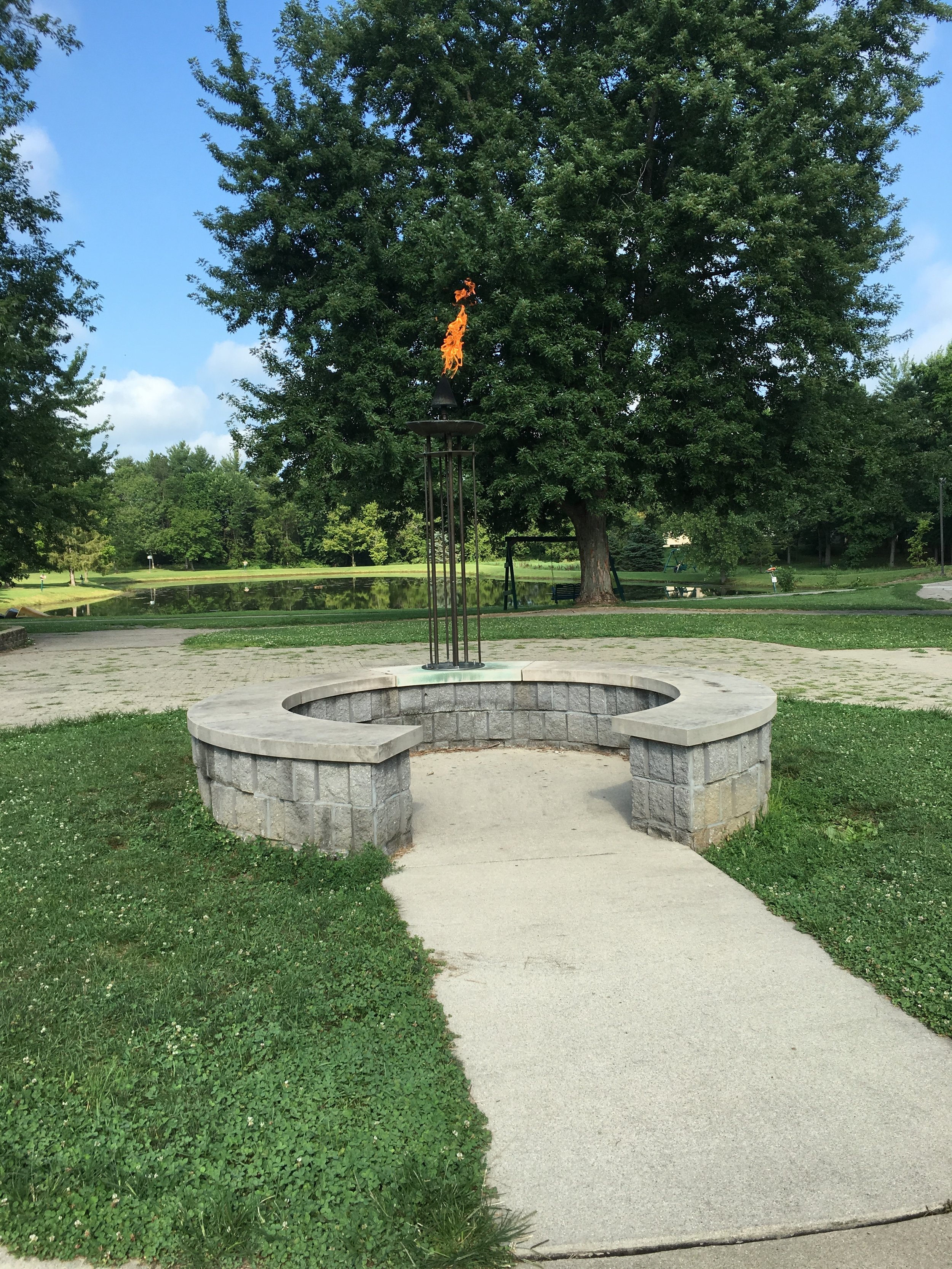
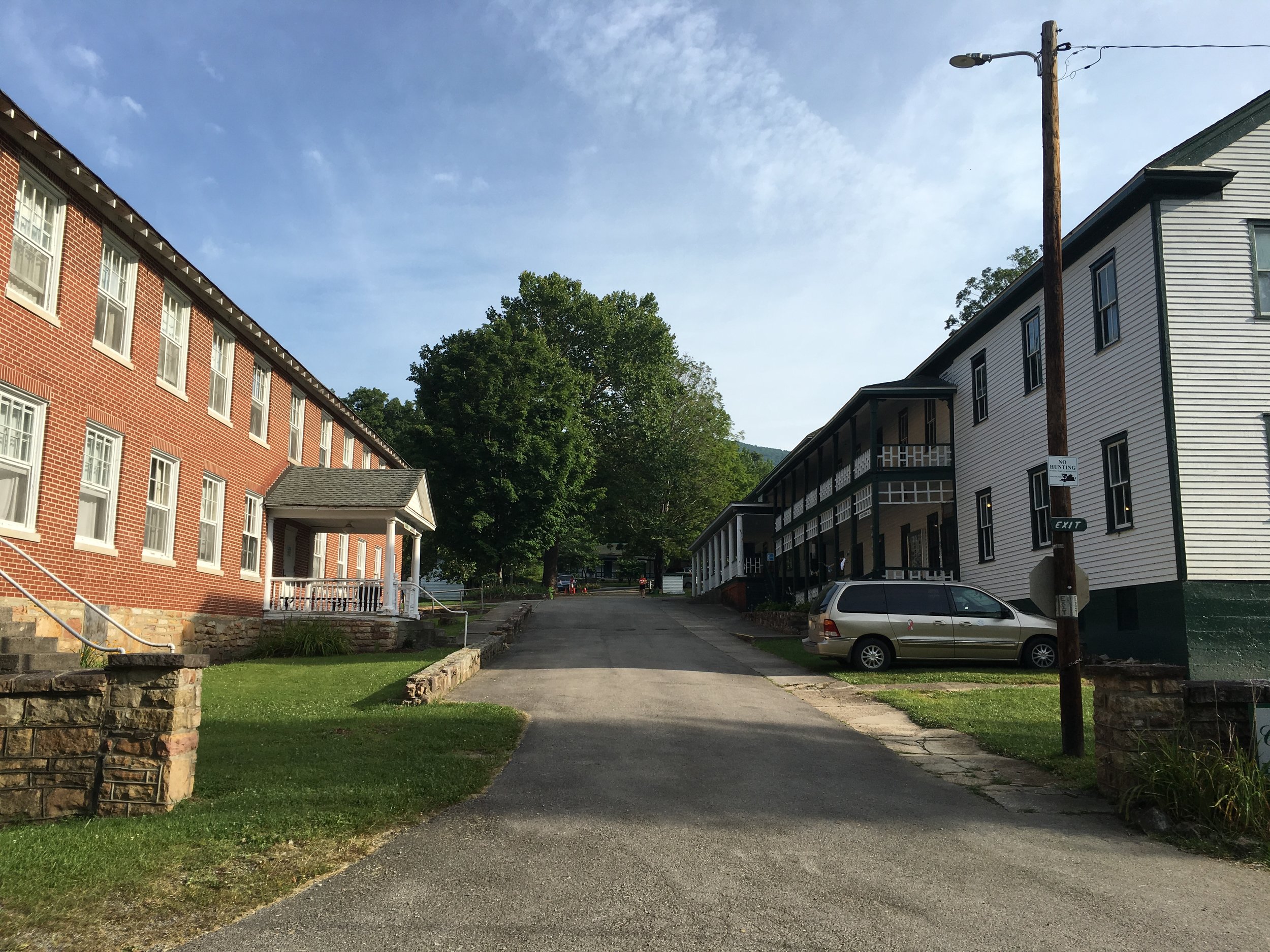
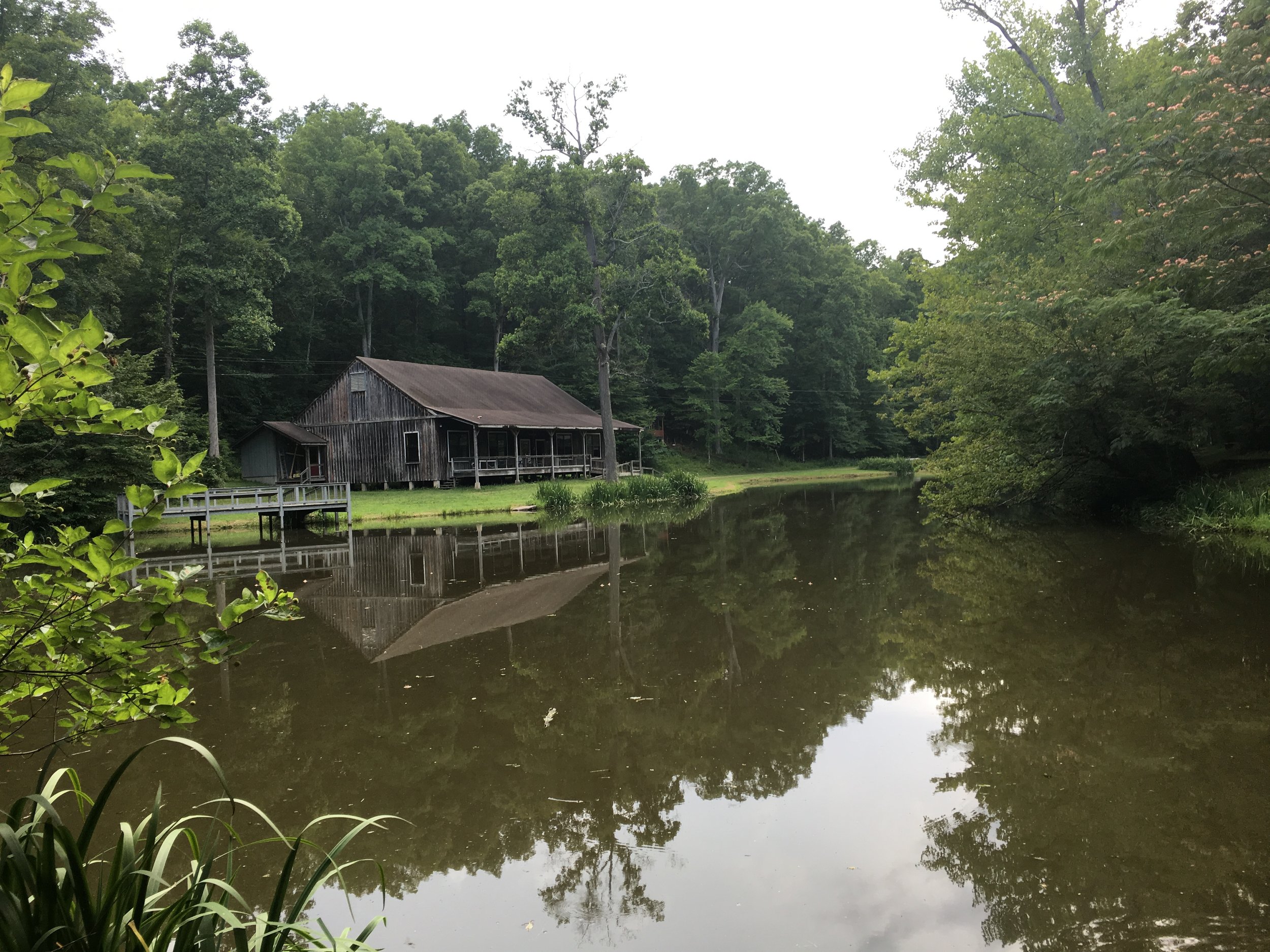
NYE 'Feels'

The National Youth Event in Orlando, Florida - what an interesting few days! Minerva and I did not know what we were signed up for, but it turned out great. The relaxing atmosphere of NYE was a welcomed contrast to the intensity of each camp.

As the two Palestinian Peace Interns, we were paired up for a workshop together to talk about our life living under Occupation. We were given a conference room that seats about 70 people, and two workshop times for two days, an hour each. Our first workshop had about 15 people show up, most of whom were adults. This wasn't very encouraging to us because we were at the National Youth Event! After all, we were to reach the youth.

Our next workshop had a better turnout with about 20 people, still a majority of whom were adult chaperones. Then that night I ran into Lisa. I shared with her our story as Peace Interns from Palestine, and asked if she would tell those she knew at the conference to find our workshop and experience it.

The next day our first workshop had people tell us that they were there because Lisa recommended it. We had a total of 40 people that time. Lisa, if you are reading this I just want to thank you for being so kind! You made the NYE week so much better.

At the end of that workshop, it was sinking in that we had only one workshop left after that one and that we had reached a total of 75 people at an event that was hosting 3,000 people - this was not nearly enough. So I told those attending this: If you honestly felt that you learned something here that is of any importance, please tell your friends to come to the next workshop because it will be the last workshop we have. It will be the last opportunity to share our story of living in Palestine with all of you at NYE."

What happened next was beautiful...

The final workshop was full and even had a few people standing in the back! Many of them expressed that they were there at the recommendation of a friend. There was even one boy who had been in the earlier workshop and stood outside the doors of our small conference room trying to recruit other youth to come in!  I apologize for not having the opportunity to learn your name, but sincerely thank you for your passion that day.

I thank God for the platform to share our story with so many people this summer.

I am thankful for finding those who developed a passion for our story by attending our workshop.

I pray that your passion goes beyond just that day and beyond just you, but also comes to life in the world.

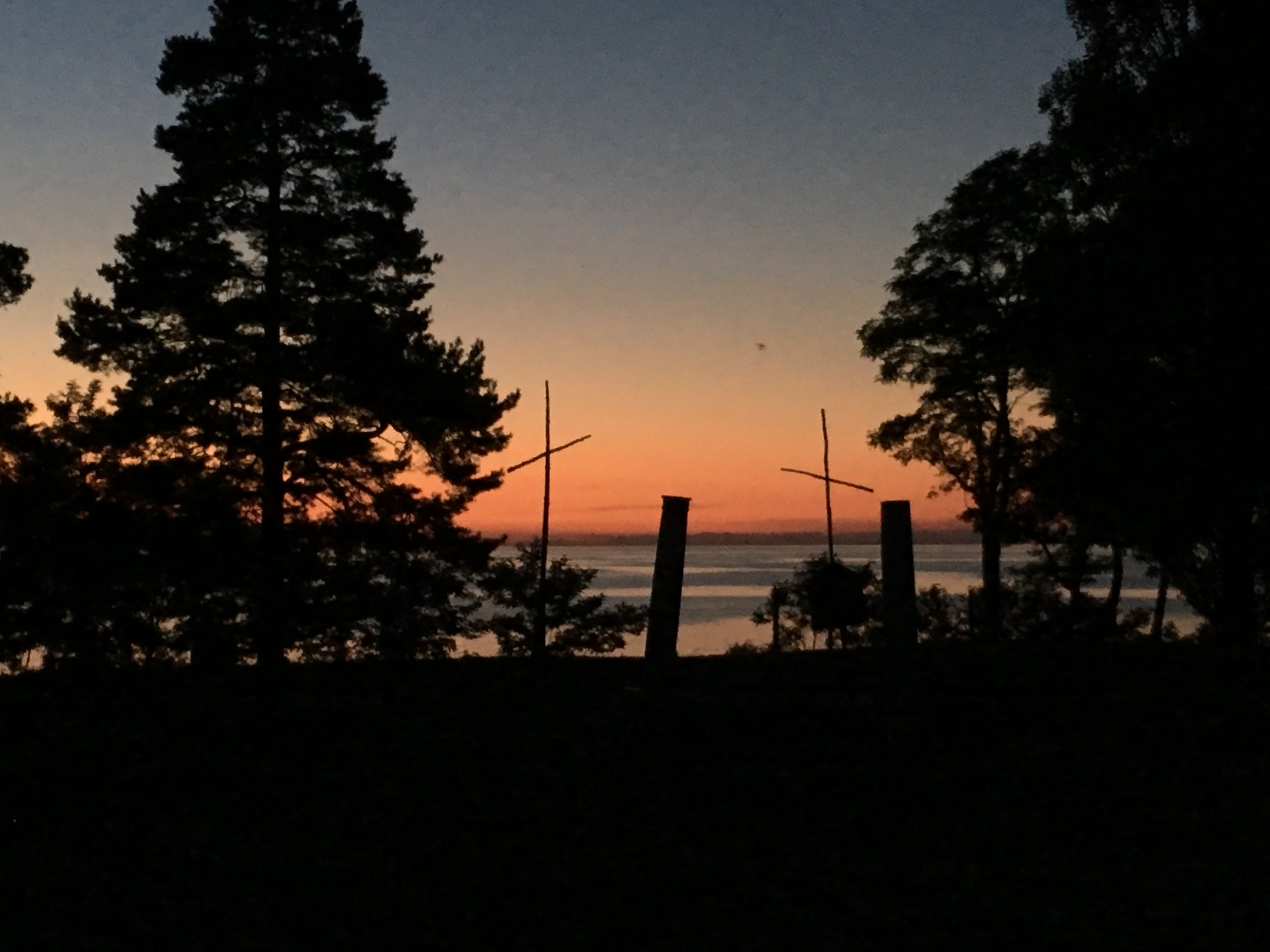
One last Campfire...

I could have never imagined how much fun and exciting this camp would be, Cascade Christian Camp in Idaho was amazing! We went rafting in Boise river and we did zip-lining, it was my first time to do these things and I loved them! It was awesome to see campers and counselors conquering their fears, being encouraged and having trust in themselves, people and God to do these things! They were really great group activities!

One night we went by the lake to see the stars,the sky was so dark and full of stars, we could see the milky way, some of the zodiac signs, spaceships, falling stars and Mars and Saturn through the telescope. It was pretty cool! We also had different theme every night, we had Mexican, Mardi, Italian, Mediterranean, Hawaiian and American food along with decorations, accessories, songs, games and dances, it was a lot of fun! The camp was pretty small but and we felt like a family, and we learned through the week that "we don't need a whole lot, just use what you got, faith, hope and love, just a little bit of faith, hope and love".

The last day of camp, we were preparing the songs for campfire and our small group decided to sing a special song so we chose "Let it rain", and we sang it at the end and it actually started sprinkling while we were singing, people were smiling, some were raising their hands up and some were hugging, it was a great moment and a perfect ending for this camp and for the whole camps I have been a part of this summer. I don't want to think that these are probably the only church camps I will ever have, I truly feel that it is a blessing for the youth here to have the chance to go to these church camps, I know if I had the chance to go to them while I was growing up a lot of things would have been different for me. I don't know how would I feel when I go home and how much will I miss being in camps but I will sure miss the little things, the moments when I felt God is there and everybody was feeling the same way.

Expectation vs. Reality

Initially going into the summer, I was a little anxious about my internship in the USA.

I did not know what to expect from the camps I was going to, and what the campers would be like. I thought it highly likely that I might find some existing prejudice towards Palestinians specifically and Arabs in general. However, instead of finding negative impressions from false stereotypes, I found that there was actually a lack of any knowledge at all of the Israeli Occupation of Palestine. This prevalent lack of awareness and information was present in the minds of the youth and even the adults. So, I tried to explain the occupation to the best of my ability to campers and counselors alike.

The main reaction was: "I had no idea!"

Since there was little to no knowledge, I then expected to be asked more questions on the issue. I thought they would want to ask about every little detail of the oppressed and the oppressors, and their relationship with each other. However, I was dismayed that very few would ask for more information and details about Palestine. And I don't know if it would have been better to face preexisting misconceptions and positions on Palestine and the occupation.

As a Palestinian, it is a very discouraging and disturbing thing to realize that your struggle from oppression is something that is not only unknown to so many people but sparks very little interest. Especially the interest of the people whose government provides some of the largest military aid to the oppressors. (The United States gives Israel three billion dollars in military aid annually. There is currently talk between Israeli officials and U.S. President Barack Obama to raise that number to five billion dollars before the end of his term.)

I am not saying that all people were uninterested in Palestine and the occupation. There were a few people from every camp that would come and ask me about more things and were genuinely interested. But why is it that the majority of the people that we come across are so indifferent?Matthew and I were talking about this at one point this summer, and he pointed out something very important. That if you are not the marginalized it is difficult to care for the marginalized.

What does the Bible say about being indifferent to the plight of the marginalized?"

I know your deeds, that you are neither cold nor hot. I wish you were either one or the other! So, because you are lukewarm--neither hot nor cold--I am about to spit you out of my mouth." Revelation 3:15-16

What should the Christian response be?

"If anyone with earthly possessions sees his brother in need, but withholds his compassion from him, how can the love of God abide in him? Little children, let us love not in word and speech, but in action and truth." 1 John 3:17-18

Let us love in both action and truth. 

Camp Gwinwood, the last hoorah.

I just finished my last camp. What?! How did this happen so quickly? I still feel like I'm trying to process the month of June, and it's already August 6th.

I never thought that spending 24/7 with so many other people, one week after the next, could pass so quickly. But there's something about camp community—it's like a vortex of insight, kindness, silliness, and energy that sucks you in and spits you right back out into the great big world, where community never seems to reach the same depths that it can with a lake, a campfire, and these amazing people.

Here are some observations from this week:

—The youth of today are much cooler than I ever was or will be. And they can DANCE. Really, really well.

—I started this summer being really bad at the silly parts of camp. I just wanted to talk about justice and be a nerd. Now, I can't stop humming Gwinwood's traditional campfire song, "Black socks, blacks socks. They never get dirty; the longer you wear them the blacker they get. Sometimes I think I should launder them, but something inside of me says not yet, not yet, not yet."

—Wednesday is the golden day. On Monday and Tuesday, everyone else is energized and excited, whereas the peace interns arrive already worn out. Just make it to Wednesday, and then they feel like family, and you can be silly and tired and happy and bitter and they'll forgive you and accept you and take you right in. —Camps should have camp pets, but a camp baby will do. Thanks Zadie Blake, you were adorable, and I loved when you smeared Oreos all over your chubby cheeks.

—Make sure you're loading the right video for workshops, so that you don't awkwardly show the wrong one and confuse everyone.It has been a great week. This was my most diverse (achem *only* diverse) camp, which added a unique texture during our Hot Topics and Peace Intern discussions. I was absolutely terrified to give the workshop on Black Lives Matter, but there were actually some really good discussions that came out of it. I think I become afraid because I know the weight of this topic and I'm so scared of not doing it justice. All I can do is create a safe space to learn about tensions between the police and the communities they serve, but it's up to the response of the youth to guide the conversation. This camp had AMAZING yout

—SO thoughtful and so smart. I loved hearing their opinions and watching their reactions to bias they found among the group.

Thank you Camp Gwinwood!

Feeling a Tad Bit Salty...

Within the past year, a new phrase has introduced itself into my vocabulary. I’ve heard people say “Someone’s a bit salty…” over and over again. Baffling as the birth of this expression may seem, I want to take a minute to recognize that the Bible itself gives us permission to be salty.

Understanding this expression would likely lead you to think I’m referring to Matthew 21:12-17 where Jesus gets a little salty about what is going on in the holy places. “My house shall be called a house of prayer,” Jesus proclaims, “but you are making it a den of robbers” (Matthew 21:14). Yes, Jesus did indeed get a bit salty, yet this is not the passage I’m referring to.

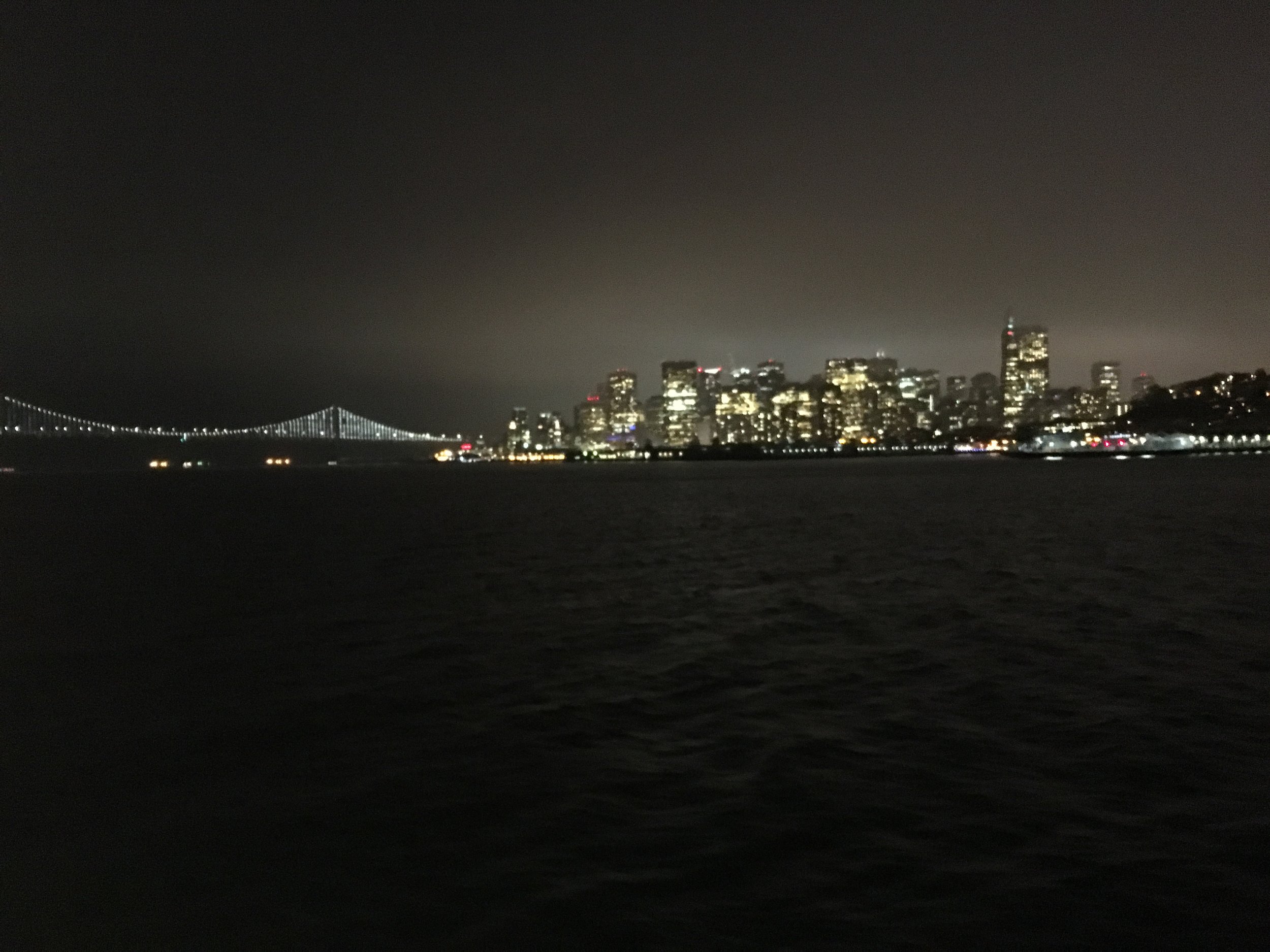
San Francisco Bay, NAPAD Convocation

San Francisco Bay, NAPAD Convocation

Let us then rewind to the fifth chapter of Matthew – the beatitudes. Blessed are you who are meek, Jesus says. Blessed are you who are peacemakers, Jesus says. You who mourn, you that are poor in spirit, you that are merciful and persecuted! Yes, all of you! You are blessed. Your reward is great in heaven, you will see God. You will be called children of God. Yours is the kingdom of heaven. You will indeed be comforted. Blessed are all of you!

Blessed are all of you, but who are you? Do you know who you are? Do you know your innermost self? Immediately following these wonderful verses is a command to be salty. All summer long, I’ve been leaving young people and fellow counselors on the journey with a passage I’ve been reflecting on deeply. Matthew 5:13-16 is a call to be our authentic selves, as Parker Palmer might say.

“You are the salt of the earth; but if salt has lost its taste, how can its saltiness be restored? It is no longer good for anything, but is thrown out and trampled under foot.“You are the light of the world. A city built on a hill cannot be hid. No one after lighting a lamp puts it under a bushel basket, but on the lampstand, and it gives light to all in the house. In the same way, let your light shine before others, so that they may see your good works and give glory to your Father in heaven.” (Matt. 5:13-16, NRSV)

Camp Christian, Ohio

Camp Christian, Ohio

Right here in scripture we are granted the authority to be salty! You might notice, however, that this is not a call to be angsty or prickly to our neighbor. No, this is a call to “let your life speak” as Parker Palmer most eloquently put it. This is most certainly a call to embrace your true self as God so wonderfully made you. This no doubt comes with periods of intense discernment and reflection with the Spirit alongside us. Our true, authentic self is… who? How do we know who our authentic self even is? Yet we are called to be that – to be the salt of the earth. To preserve what is good and true in the world by being our authentic selves, for what good are we if we do not be that which we are so uniquely made to be? If salt does not embrace its saltiness and live its authentic self, what good is it to anyone?

Yes, I believe this passage encourages to be who we truly are. A peacemaker, for example. To be the most authentic version of myself as a peacemaker, I must rely on a sermon preached to me a few years ago by Rev. Vrizola Law as part of my orientation into the XPLOR program (Disciples of Christ). She called each of us to know our story, for what good can we be in the darkest places of this world if we do not know our own light? How can we shine as a light of the world if we do not know where the light switch is? So to be a peacemaker, I must know my true inner self and my story.

My story is that of struggling with my sexual identity from a very young age. Actually, come to think of it, I didn’t struggle at all with it. It was normal to me to be gay, so to speak. It was not normal for the world, though. The world struggled with my authentic self. I fit many stereotypes applied to homosexual men. I walked different, talked different, played music instead of football, got excited over my red sequin shirt for show choir! Yes, they were and are all true of me. I had no problem with this, though. This was not my struggle – this was the struggle of society.

I internalized societies struggle, at which point it became my own. Yes, I internalized the struggle that society has accepting men who are not manly men. I tried to be that caricature for many years so that I could be accepted by society. It never truly fit, though. In fact the more that I tried to be what I wasn’t, the more ridicule I got. No, it didn’t work out at all to be what I wasn’t. So at 26, I gave in to who I am. I lived authentically.

Craig Springs, Virginia

Craig Springs, Virginia

This has empowered me to have difficult conversations all summer about the place of gay, lesbian, transgender, bisexual, and non-binary gender/sexuality conforming people in the church. My authentic self has allowed me to fulfil the peacemaker portion of the beatitudes in my own unique way. It only took the support of several wonderful Pastors along the way, Parker Palmer, and reflecting on one piece of scripture to come to ask myself what good am I for anyone if I cannot know my story and be my authentic self?

Oh friends, there is also danger in this passage. Great danger, to be honest. Consider how one can possibly know if we are being pulled toward an authentic self or we are being misled toward inauthenticity. Growing up Catholic, I tried for many years to be the heteronormative male ideal because the faith I learned taught that the authentic self must only be heterosexual. What a dilemma. That which was inextricably hardwired into my very core was wrong in the eyes of the church. My learned faith taught me to struggle and change it. My owned faith had the final say, however.

Bethany Hills, Tennessee

Bethany Hills, Tennessee

Long nights spent with God by my side in discernment of just how to be the salt of the earth or the light of the world taught me the faith I came to proclaim for myself. My relationship with God, embraced and nurtured over many years, whispered truth into my life. This, I believe, is how we come to know ourselves authentically – by relationship with God. You define God! You do that for yourself. I will not say that God needs to look any particular way. Instead I will say that you define God and be in relationship with your unique and true understanding of that which is greater than ourselves. That, I believe, is the understanding that guides us into authenticity.So as I end my time at camps, I leave you with a few reflections. You will undoubtedly come to know yourself and God in ways that no other person on earth will truly understand. Yet start with knowing your story, as the wise Rev. Vrizola Law taught me a few years ago. Continue with finding your authentic self and letting that speak truth, as Parker Palmer encourages in Let Your Life Speak. Then, reflect on the command of Jesus himself in Matt. 5:13-16. However you know Jesus and God, that knowledge is part of your authentic self. Perhaps it will be ever-changing, or perhaps not. It is that knowledge that speaks to you through this scripture. Then go out – go be salty

"You've Got To Know Your [Stuff]!"

Last week was my penultimate camp experience in Southern California. So far this summer, I have been too busy and too happy to miss home too much, but this week in California, exhaustion and homesickness really smacked me in the face. I arrived at camp like a zombie, so tired that I could barely maintain a conversation that required more than mumbles and grunts. I went to sleep Sunday night wondering how on earth I was going to make it through the week. Minerva shared her story with the camp on Monday night, and I was scheduled to start giving workshops on Wednesday. Looking back, I am glad that they pushed me later into the week, because I was able to realize how much it means to me to be teaching and engaging with the youth. Until I was able to meet with them, I felt empty. But once Wednesday afternoon rolled around, I got to talk to the youth about the death penalty and race, and seeing their expressions as they learned about the injustices of our criminal justice system helped me realize all over again why this summer is so meaningful and important to me. Originally, I had two main fears: 1) That I wouldn't pick the “right” workshop topics to match youths' interests, and 2) That I would face a lot of opposition to my workshops. Neither has been an issue this summer at all. For one, I no longer think that there are such things as “right” topics. I met a really incredible woman (and past Peace Intern from '06!) this week at the Disciples National Convocation. Her name is Bonnie Osei-Frimpong (Bonnie, if you ever read this, please comment with the correct pronunciation of that name!). I only got twenty minutes to chat with her, but twenty minutes was more than enough. She filled those twenty minutes with the best advice I've gotten all summer. “You've got to know your [stuff]. BE SUBSTANTIVE. There's plenty of muck in this world. You've got to be substantive.” Her own DPF experience taught her how to use twenty minutes to explore all that she can of the nooks and crannies of a conversation. While listening to her unleash her genius upon me, I realized that topics actually don't matter THAT much. What matters is how well we listen to one another, and how much we challenge each other to see alternatives. For the life of me, I cannot remember what my past peace interns have said that have changed me so much. But I remember exactly how they made me feel—how I felt acknowledged and challenged and eager to unpack more. All it takes is one realization that maybe there are other answers and maybe there are better questions, and we get to be changed forever. There is no wrong topic, but there are wrong ways to approach topics, and there are wrong ways to approach people. Therein lies the crux. As for facing opposition, that almost hasn't been a challenge this summer at all. I think the secret here is, as a past peace intern told me, to always tell my Truths. If I know I'm speaking from that space, from my own personal experience and concerns, then opposition can only help me unpack my Truths more. What's so scary about that? Now, a confession: I had a third fear that I didn't even know I had. I didn't want to teach a workshop on Black Lives Matter, because I didn't think I could handle it. I almost broke down completely in the airport when I saw the news on the Dallas shootings after the deaths of Alton and Philando. I had no idea how to talk about something so painful in front of a room full of people. This is an incredibly complex conversation. A lot of people think BLM is an anti-police movement—that is fundamentally untrue. The leaders of BLM have collaborated with researchers, activists, and the President's Task Force on 21st Century Policing to create extensive policy goals aimed at understanding and solving the strenuous relationships that often exist between police and the communities they serve. This conversation with youth requires a lot of unpacking. What is systemic racism, and how does it affect us (sometimes unknowingly)? What is privilege? What is white privilege? What is it like to live in these communities where major tensions exist between the police and the community? What does it mean that our nation is talking about police as though they are separate and distinct from the communities they serve? Why have there been riots? Why don't we say “All Lives Matter”? Don't the cops have the right to use their guns if they feel afraid? I'm hearing Bonnie's voice: “YOU'VE GOT TO KNOW YOUR [STUFF].” But Bonnie, can't I just be a coward and keep putting this off? In California, I decided I couldn't put it off any longer. After such a horrible week for our nation, I knew we needed to unpack what's going on together, in the safe space of camp. We began the workshop in family groups, discussing what we already know about BLM and how that phrase, “Black Lives Matter,” makes us feel. Collectively, the group knew very little about the movement. Among the comments: It's a popular hashtag. It should be All Lives Matter instead. Police brutality. Riots. Fighting for equality. I gave a brief history of the movement, explaining how it went from a Facebook status to a hashtag to a campaign with incredibly nuanced policy goals, then the family groups discussed how they feel about “Black Lives Matter” v. “All Lives Matter.” I passed out quotes from key figures in the movement who explain why they say Black Lives Matter. When it comes down to it, we know that all lives matter. That is not a question in our minds. (Although, I would definitely argue that the death penalty is one of the nation's ways of disagreeing with that.) But after centuries of inequality and systemic racism, we are at a point where it is vital to ask: Does this nation actually believe that black lives matter? I'm not convinced, as we watch black bodies being aggressively man-handled, shot, and left in the streets, as we examine the racial disparities in our prison-industrial complex, and as we assess the inequities in access to quality education. After Alton's death, the cop can be heard saying “Just leave him.” And let us not forget that Michael Brown's body was left in the street for four hours, after being shot six times. Does this nation actually believe black lives matter? Let's talk about it. After giving that workshop, I felt like it was the most important thing I'd ever done. I don't mean for this to sound prideful; I mean that it felt right to be unpacking this together and challenging ourselves to ask the hard questions that matter. We must be ready and willing at all times to confront our messy world and our own thoughts. I truly believe that this is the only fight worth fighting.

An adventurous week

Loch Leven camp was amazing! It was such a fun, spiritual and meaningful week and full of new experiences for me. On the second day of camp, we had a strange and cute visitor, it was a baby bear lying on a branch of a tree near the dining hall who lost his mommy and he stayed there for awhile.

The area was full of bears, mountain lions, spiders and snakes, thank God we didn’t see them all. We also slept outside for a night and it was a bit scary knowing that there are animals surrounding us and it was a bit cold but overall it was nice sleeping under the stars and trying something new.

We also did a great trust and teamwork group activity which was a wall climb. Campers and counselors had to get each one of the group over the wall to the other side. It seemed scary and it was dark but most of us did it! I ended up with a couple of bruises but it was worth it!

Being here this summer and moving from camp to camp I learned that most people don’t know anything about my country Palestine, they don’t know where it is or what happened and is happening right know, and if they knew they only knew one side of the story, and most of the times, when people hear that I am from Palestine, their questions would be about arranged marriage, how women are treated their, if I wear Hijab back home, how do I dress and what do I eat, they are not about the occupation, the checkpoints or the wall!  So I really appreciate this opportunity to tell people the other side of the story, the side that they would probably never hear in the media, and increase their awareness about the need of peace and justice in the world and I appreciate their willingness to listen to something new and openness to think about it.

Last week was intense, we discussed Palestine's situation, black lives matter, and LGBT. I have seen different responses and opinions and all of us learned a lot. I really enjoyed Loch Leven and  meeting everyone there and I really appreciate being a part of this amazing group of counselors and directories, Brain, Jeannie and Chris who made me feel welcomed and I sincerely thank them for a great week, I feel blessed that I was there.

Seats at Christ's Table

I am not ordained, and yet…
I AM A MINISTER.
I AM A BEARER OF MY EXPERIENCE WITH GOD.
I BRING TO THE TABLE UNIQUE GIFTS THAT I ALONE CAN BRING!

And so do you…

As the story of Esther goes, she was positioned in just the right place for just the right time. Yes, her place in the king’s favor allowed her to advocate for a community on the fringes. Her heritage was hidden for a while but never forgotten. Esther reveals just how scary it is to stand for the marginalized of society, yet sometimes our positions demand such a stance.

Midway through this internship, my primary focus has been on inclusion of the LGBT community. Their place at the table of Christ is essential to fulfilling the Kingdom of God. If you find this statement to be radical, I encourage you to ask yourself why. Through the Hebrew Bible and New Testament, it is the marginalized who God stands with. Those on the fringes are not forgotten by God. Instead, God challenges time and time again the status quo and reminds all people that we are called to protect the marginalized.

While my topics range from white privilege to the death penalty, I focus primarily on a group closest to me that continues to suffer blatant exclusion from Christ’s table. It is still a fight for someone identifying anywhere on the LGBTQIA spectrum to serve openly as clergy. The debate rages whether churches need to declare that they are indeed open and affirming or if people can just tell by attending. To answer this question, I speak only for myself in saying vehemently that NO, I cannot just tell by attending your church that I am truly welcomed and affirmed. The history I must claim as a gay man says this – churches exclude me and there are only a few diamonds in the sea of coal that both welcome and affirm. If you do not say it, I cannot know it.

The dialogue concerning inclusive theology is essential at the denominational level, regional level, church level, and camp level. My experience midway through this summer is that my views receive a great deal of support from clergy and church leaders alike, yet surprisingly my conversations are quite often the first of their kind to make their way to our young people. Calling all clergy and church leaders here, I need your help!

There are texts in the Bible that are often used to do great damage to my community, yet there are only a select few. While in Leviticus we may find one such passage, in Deuteronomy we find another that encourages the elders of a town to stone to death unruly children. Why is it I am the first one who has made their way into several lives this summer asking these children how to make sense of this? Why am I the first for so many young people to have asked why embracing a Levitical law condemning homosexuality is more common than embracing the one encouraging us to stone our unruly children to death? This is essential to including all marginalized communities at Christ’s table, and dear clergy of the church, it happens to fall on you to be providing spaces for these conversations to be happening.

The resounding temperature of my conversation this summer has shown that these discussions are not happening. I have left my loft at a small liberal arts school having completed my freshman year of college to represent a discussion that those far more educated than me are often times avoiding. Esther hid her identity for just the right moment, yet the miracle was her decision to use her placement at the table to help the marginalized find their own seat. You, clergy members of Disciples of Christ, are positioned as Esther. When my conversations stop this summer and are forgotten by many come this fall, it is up to you to keep them going. You represent the people of God – ALL PEOPLE – and I encourage you to keep these conversations alive.

There are many people doing many great things, but the theology of acceptance and inclusion of those in the LGBTQIA community is coming as a surprise to far too many of our young people. I encourage you to make your pulpit alive to this conversation. You are the advocates for the marginalized. You are the educators of Christ’s inclusion. You, friends, are the ongoing conversation these young people will be left with as they return home from camp this summer. Please do not let the call to inclusion fall silent.

Blessings,
Matthew

A prayer

Dear Loving God,

My heart is heavy. Everyday brings another heart breaking story: terrorist attacks in countries where the people have already suffered and seen so much war and destruction; the death of another person of color by a police officer, the murders of police officers, not to mention the other small acts of violence and murder that don’t gripe the nation or world media, but which cause irreparable damage and suffering. Each act of violence leaves behind a slew of victims; not just those who died, but family and friends who are left to mourn and try to pick up the pieces of their shattered lives.  Children without fathers and mothers, mothers and fathers without their children; lives all cherished by God snatched in seconds because of hatred, violence and fear.

My heart also breaks for those who engage in acts of violence. I am overwhelmed by the anger, fear, and hatred that cause some to view other people that are a different skin color, or have different religious beliefs, as such dangerous threats that they are to be killed.  I am devastated that there are some people who believe that the only way to gain justice, the only way to counter hatred and violence, is by taking the lives of innocent people.  The individuals who engage in these acts of violence are mothers, fathers, daughters, and sons.  They too, are beloved children of God.

I cry for Adel Jaf, one of 175 killed in a terrorist attack in Baghdad July third. I weep for Alton Sterling and Philando Castile, two of many men throughout the last few years that have been killed by police under questionable circumstances. I mourn for the five officers murdered in Dallas: Brent Thompson, Patrick Zamarripa, Michael Krol, Michael Smith, and Lorne Ahrens.

It grieves me that as a society-we believe certain lives are worth-less than others.  Those who are killed in Baghdad-whether by terrorists or by western forces-often become nothing more than a number to be rattled off in a news article. Their lives and stories are erased. It pains me that those killed by police-are often portrayed as criminals and thugs -regardless of their criminal history or lack thereof. By virtue of their past or skin color, their lives are viewed as easily discarded. And I am devastated that Micah X Johnson in response to the racism and hatred that he railed against, decided that the best way to deal with his anger and the injustice that he saw, was to go out and shoot and kill five police officers.  His actions, as well as his own death, have left scores of people mourning: the family and friends of police officers, and his own loved ones.

I find myself asking with the psalmist, how long O, Lord?  How long O’ Lord until your children learn to value and care about each and every life? How long O’ Lord until we reject the myth that violence saves and brings justice? How Long O' Lord, until the tears stop?

I Am Tired

When it comes to engaging in social justice work, rest is vitally important. During this mid-summer retreat, I am feeling physically rested. As for spiritual rest-well that remains elusive.

I identify as afro-Puerto Rican. Meaning that I hold onto my identity as a Puerto Rican woman, while acknowledging my indigenous and African roots.  Those who know even a little bit of American history know about the centuries of violence inflicted on indigenous people and Africans.  

However, as horrific as the violence inflicted on black and brown bodies in the past was, what is disheartening is that this violence continues to be a part of American society. And it makes me angry. I am angry that another person of color-unarmed-has been killed by American police. I am angry because this seems like the beginning of script that we are all familiar with-angry protests, promises by law enforcement and government officials that a thorough investigation will be had only for those responsible to not be charged, to have charges dropped, or to be given a token sentence.  This familiar script simply reinforces the notion that in black and brown lives don’t actually matter. My life doesn’t matter.

I am tired of having to defend my worth and existence to a society that will always see people like me as thugs, thieves, and criminals no matter what we do. I am tired of having to pretend that everything is alright-that the continued violence against black and brown bodies doesn’t bother me.  The reality is the media only covers a fraction of the violence against black and brown bodies perpetrated by the state-the rest are often ignored or dismissed. In most cases, the official narrative is parroted without thought: the people killed were a threat, were thugs, and were worthless.  The larger society has the privilege of being able to pay attention to violence against black and brown bodies only when it makes national news. As a person of color, I don’t have that luxury. I hear about many of the local and insignificant deaths. The names that are printed in a short article and often forgotten by everyone but loved ones.  Their lives sniffed out and erased.  

Do their lives matter? I think their lives mattered, but society’s silence serves as a resounding no.

I have to go about my day fearing that I could one day be next.  I have to keep those fears silent and internalized knowing that I would be ridiculed for having them. What do I have to worry about? I just need to “act right,” not talk back, not “resist,” do what I am told; do what I am supposed to do. I just need to be quiet. But I know that sometimes doing “everything right,” isn’t enough. That because of the color of my skin, my life could be snuffed out and my death considered justified.

I am physically rested. But I am spiritually tired and broken. And no amount of time off is going to heal me.  I need the violence to stop. I need the deaths to stop. I need the worth of people of color to be affirmed. I need my life to be affirmed.  I wonder, does the Church hear my suffering? Does the Church care?

The Church's silence is deafening.

Moving in God’s grace

“What is grace?” I haven’t really thought of the meaning behind this word that much until this summer. I realized how blessed we humans are and how beautiful it is to receive the grace of God, this gift of endless love, mercy, acceptance and forgiveness that God gives to us, to everyone! no matter if we are “good” or “bad”.

"For it is by grace you have been saved, through faith—and this is not from yourselves, it is the gift of God” (Ephesians 2:8).

The “secret of grace” and “secret of the kingdom” were the focus of camp Chandler - Alabama. This camp helped me to realize how we all experience grace in our lives and how to think about offering grace to others around us, to all people, even when it’s too hard to give it to who we think don’t deserve it, people who we don’t like, people who are different from us and people who heart us. Those people that we think are bad and are not a part of God’s kingdom are in fact are. God goes out to seek the lost. God finds us and comes into our hearts and love us and bring us home. God makes a decision for us. God comes into our world to invite us to join in God’s Kingdom building. We don’t find God, God finds us. God isn’t lost; we are.  That’s the secret of the Kingdom. The kingdom isn’t about our leaving this world to go be with God. It’s about God coming into our world and choosing to be with us.

This camp was amazing! The nature of it, the lake, the trees and the weather were absolutely beautiful. It was kind of a small, quiet compared to my first camp but it was more close. Those thirty high school camper are such insightful, mature and smart people and I enjoyed meeting them a lot.

At Peace and Justice night, I got the chance to give my workshop to the whole camp and it was great. Everyone was interested and involved and I loved it. They were really affected by the story and they were so eager to come and visit this holy land and walk in the same places that Jesus walked in. At the ending worship we had a kind of Palestinian communion with pita bread and tea which are the usual type of bread and drink to us and I said the institution words in Arabic! It was the first time I ever do such a thing since we are not used to the idea of the involvement of females with church in general. It was actually a great feeling! Also, I had my first Tie Dye t-shirt and I swam and paddled in that gorges lake.

I am overwhelmed by this camp’s hospitality, generosity and love! The staff and the director were really awesome people! I love you Alabama!

Courage to Embrace Equity

image2

image2

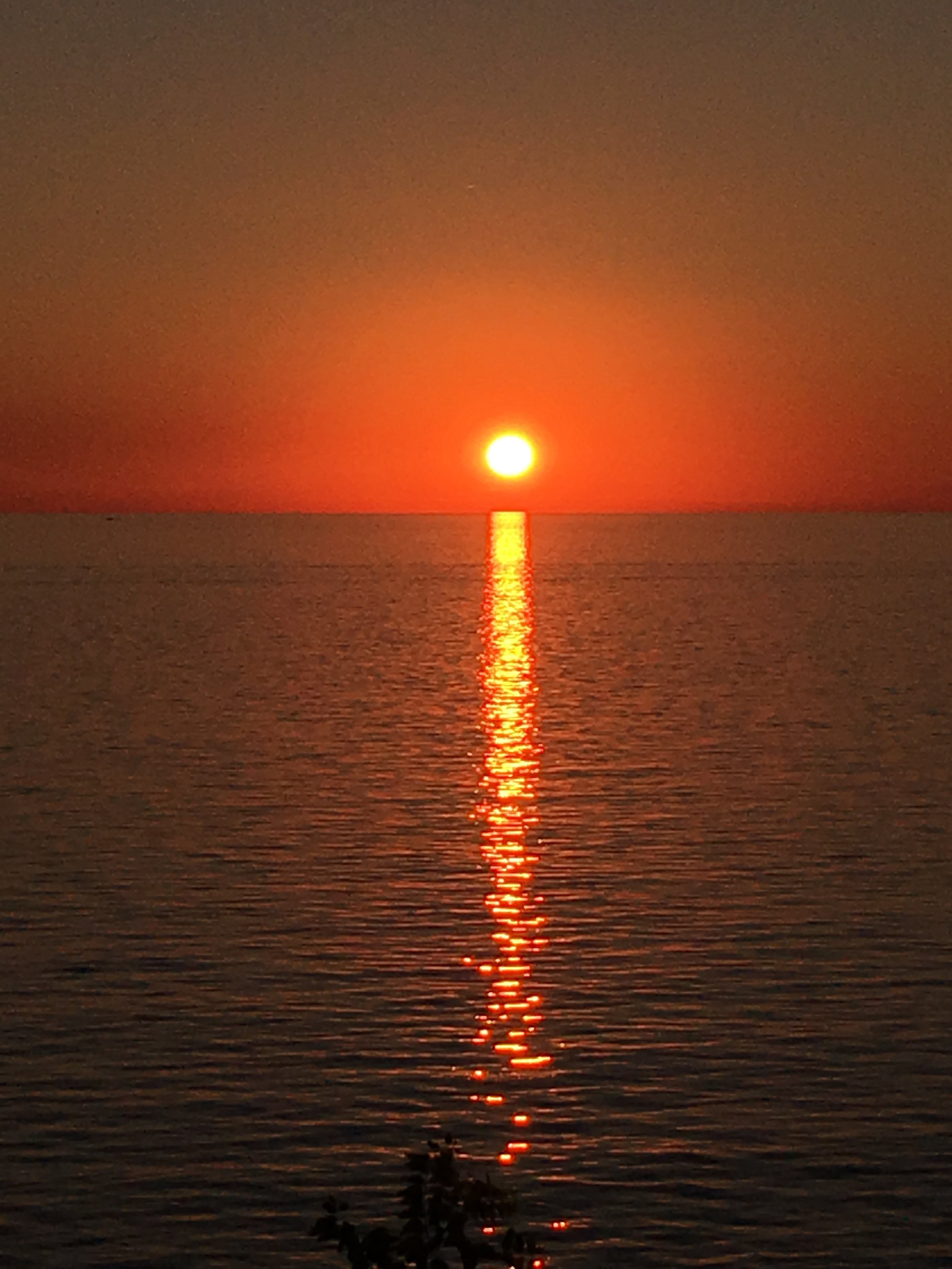
A few years ago, I made my first trip to Milwaukee, Wisconsin, and stood in awe next to Lake Michigan. Even before that first visit, I had always been intrigued by the Great Lakes. Then, the natural wonder that I had only ever read about became a concrete, tangible reality exposing itself to all my senses. Moving forward to this past week at Dunkirk Camp in New York, I felt an overwhelming awe once again as I sat next to one of God's most amazing natural wonders. If all of God's majesty can be found in a single grain of sand, when the paintbrush turns to create something like Lake Eerie, it can easily overwhelm the senses. As Friedrich Schleiermacher might claim, it approaches intuiting the infinite.In all the natural beauty, I found myself discerning how to make palatable a very real component of modern society - privilege. Sitting on the beach during sunset on Lake Eerie had me looking around and considering all of those individuals who cannot afford such an experience. While some camps have avenues to allowing under-privileged young people the opportunity to go to camp through scholarships, these allowances become the exception for the community they represent. How does one teach privilege when it is not just a matter of economic wealth? How does one see past the lenses of apathy and complacency created by their own privilege to find momentum to change societal structures in such a way that provides greater and more equitable opportunity? The sunset on Lake Eerie, beautiful as it was, did not answer. Instead, it provided even more questions.

Going camp to camp this summer highlights one resounding theme - camps are very Caucasian and often represent a vast majority who have the economic means or avenues of privilege to go to camp. Yes, it may be that in some situations families have worked extra hard in order to provide such an opportunity for their kids. Yes, earned income is not usually easy income and because of this, accepting privilege becomes a matter of understanding that it does not correlate to how hard one works. This means that a discussion on privilege finds barriers before it ever makes it to understanding.

Writing this blog comes from a calm, quiet reflection during mid-summer retreat. It comes from a place where I myself feel quite privileged. Looking back not just on my most immediate camp experience but to all of them thus far, I wonder what our denomination can be doing to create more equitable avenues to a true state of inclusivity. A conversation a few weeks ago continues to have me considering what it might look like for our denomination to truly diversify. Specifically, I wonder how an entire denomination is expected to diversify when that diversity does not always equate to financial sustainability at church level.

Imagine a new church start that brings in members of color and varieties of non-binary gender conforming or non-hetero normative people. Marginalization of these groups can perhaps leave the congregation as a whole financially bankrupt from the start. Yet in a movement toward churches without walls, we begin to see that this is most common in the church that exists for the marginalized and low-income. I believe sitting on the shore of Lake Eerie, I was gifted this pondering. We as a denomination can be doing more to afford opportunities to the marginalized. Our future as a denomination demands it.

Sunset at Dunkirk

Sunset at Dunkirk

My family group at Dunkirk talked about a few of these issues. This was easily the most fulfilling part of my visit. Again I was surprised by the depth of consideration young people can give during a reflection on equity and equality. If our young people can give such a consideration to these very real and tough issues, why can we not be doing more? When churches fail not because of lack of mission or membership but because of financial strain, we fail as a denomination. A church without walls, for example, can stand as a church with a minister who acts by vocation. Progressive as our denomination may be, this seems unacceptable and outdated. I believe in a vision that creates more equitable distribution of resources so that Pastors in even the most marginalized communities are sustainable. I believe in a future that allows for any and every child in our denomination to go to church camp regardless of financial disposition to afford such an opportunity. I believe, friends, that we can be doing a better job of distributing resources in a more equitable way throughout our denomination

.The young people of Dunkirk were so willing to enter this conversation. My job this summer is to inspire such conversations about society at large, but I am failing if I do not invite our entire denomination to also engage is this very conversation.  I find myself reflecting on equity when there are congregations with huge endowments and who also hold valuable idealized visions to serve the marginalized but perhaps do not know the best means to do so. I ask where there is equality without figuring out equity together as a denomination. I ask those reading this - what can you do in your home congregations to support Pastors serving by vocation and create a space for all children to experience summer camp? How might your own church help support the efforts of other financially strained churches? Are you a church that is itself financially strained? If so, what do you see as equitable for our denominational future? You, friends, are the answer(s) to these difficult questions.

As I continue my discussions this summer on privilege, I remind myself regularly that the marginalized do not have the convenience of remaining apathetic or indifferent. Nor should they ever engage in the luxury of complacency, as Martin Luther King, Jr. so eloquently stated. My hope is that those who are able to set aside these difficult conversations because they are unaffected will come realize that there are groups who cannot do so. It is for this reason we are called to care. My friends, it is for this reason we have such a peace intern program. My youthful family at Dunkirk entered this conversation with me, so I ask - will you join us in the conversation?

Blessings,
Matthew